
Fernand Pouillon (1912-1986)
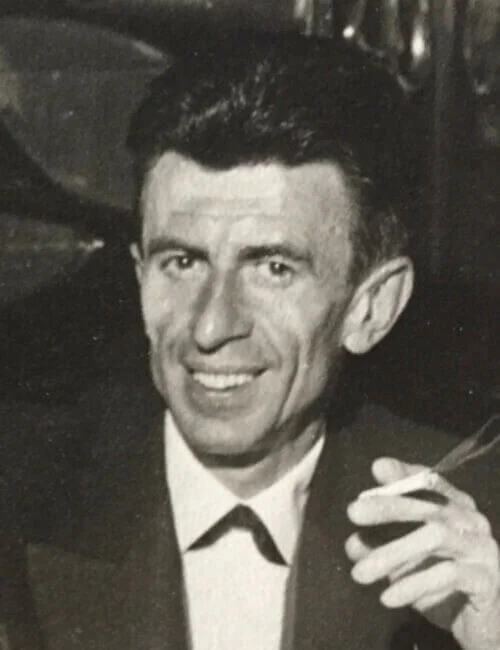
Fernand Pouillon, 1912-1986
Youth and early works
Although born on 14 May 1912 in Cancon, in the Lot-et-Garonne region, Fernand Pouillon grew up in Marseille, where he attended the École des Beaux-Arts, before moving to Paris to study architecture from 1932 to 1934. At just 22, he completed his first project in Aix-en-Provence. But it was the reconstruction of the Vieux-Port in Marseille – whose buildings had been destroyed by the Nazis – that brought him national recognition in 1948. In Marseille, he encountered many Algerian immigrant workers who had come to this major French port in search of employment.
Architecture for the many
Throughout his studies and from the very beginning of his career, Fernand Pouillon held a deep conviction in favour of popular, accessible architecture. His greatest wish was to provide as many people as possible with high-quality housing at the lowest possible cost. France was in full reconstruction after the destruction caused by the Second World War, and Pouillon worked to contribute to this national effort. His convictions were put to the test when he was awarded a contract to build social housing. He had promised to construct 200 apartments in 200 days with a budget of 200 million francs. Having won his bet, he made as many friends as political enemies.

Fernand Pouillon and his daughter Catherine
Algeria, Iran and major international projects
In 1953, Algeria commissioned him to repeat his achievement: he was tasked with building 1,600 urban housing units in 365 days, while respecting local architecture. Once again, the project was a great success and led him to work in Iran.
Pouillon returned to France to collaborate within the renowned architecture firm of Auguste Perret. In 1961, in line with the national effort, he was entrusted with building low-income housing estates (HLM) in the suburbs of Paris. Wishing to carry out a project that remained faithful to his deepest convictions, he decided to act both as developer and architect. However, the legislation at the time forbade an architect from also being the main contractor. His enemies in Paris used this against him, and he was sent to prison.
Prison, escape and legal battle
After 18 months in prison, determined to escape, Pouillon went on hunger strike and feigned illness. He was transferred to a medical unit where security was more relaxed and where he could receive visits from his brother. His brother secretly brought in a rope, which Pouillon wrapped around his torso under his shirt. Once night fell, he climbed out of a third-floor window and descended along the rope. Thanks to the Sorbonne Network – a French group campaigning for Algerian independence – he fled to Fiesole in Italy, then to North Africa. The Sorbonne Network helped him put together the substantial dossier needed to prove his innocence. In 1963, he returned to France to conduct his own defence in a highly publicised trial. The court acquitted him of the charges of misappropriation of funds, but sentenced him to a short term for escaping.

Fernand Pouillon and his wife Vera
The writer: “Les Pierres sauvages” and memoirs
During these years in prison, he practised writing and drafted a novel, “Les Pierres sauvages”, which was awarded the Prix des Deux-Magots in 1964. The novel is a work of fiction that tells the story of the construction, in the Middle Ages, of the abbey of Le Thoronet by Bernard of Clairvaux.
Deeply disappointed by France, Pouillon decided, upon his release, to join his friend Jacques Chevallier in Algeria, where he devoted himself to helping the newly independent country develop hotels, tourist resorts, administrative buildings, post offices and universities. He also completed the writing of his memoirs, published in 1968 under the title “Mémoires d’un architecte”. Both books are still being reprinted today.
Although he was granted amnesty in 1971 by Georges Pompidou, Fernand Pouillon continued to work in Algeria and opened an art-book publishing house in Paris, “Le Jardin de Flore”, which enabled him to reprint and sell old books at affordable prices.
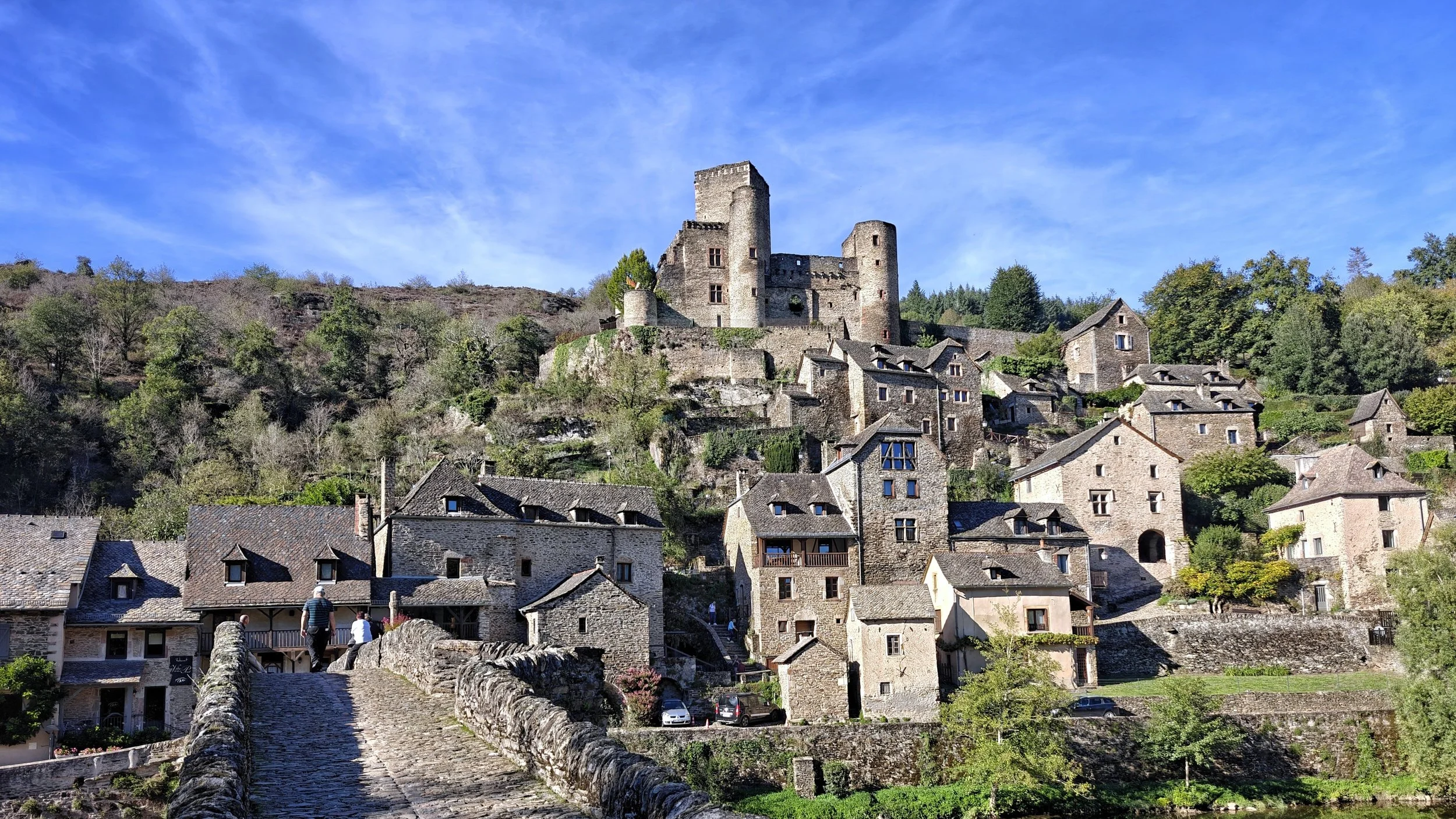
Belcastel village and its castle
The choice of Belcastel
He returned to France in 1972, looking for a historic monument to restore and turn into his holiday residence. After discovering the Château de Belcastel, he bought the ruins in 1974 and hired around ten Algerian workers to help him carry out this project.
During the eight years spent on the restoration, he continued his tireless work in both Algeria and France. Alongside the many hotels, villas, spas, ports and universities he designed in Algeria, he also built a monastery in Provence to house nuns repatriated from Algeria (1976), a centre for the Ministry of Culture near Versailles (1984) and a subdivision of the administration of the Paris Conservatoire of Music (1985). He also contributed to the restoration of the Maison du Colombier in Belcastel in 1979.
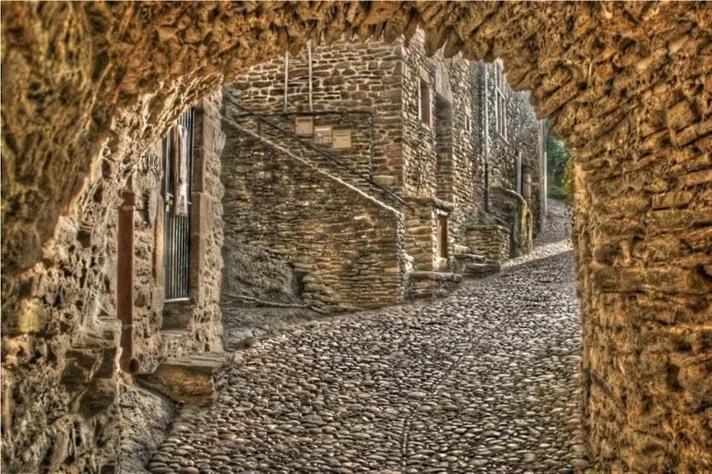
Belcastel village
Recognition and final years
In 1985, François Mitterrand awarded him the Légion d’Honneur in recognition of his contribution to national architecture. He received, posthumously, an award for his entire body of work accomplished in Algeria from 1964 to 1984.
Faithful to his egalitarian ethics, Fernand Pouillon asked to be buried anonymously in the small cemetery of Belcastel. His wish was respected. He passed away on 24 July 1986 at the Château de Belcastel, joining those generations of master builders whose tombs keep their names forever silent.
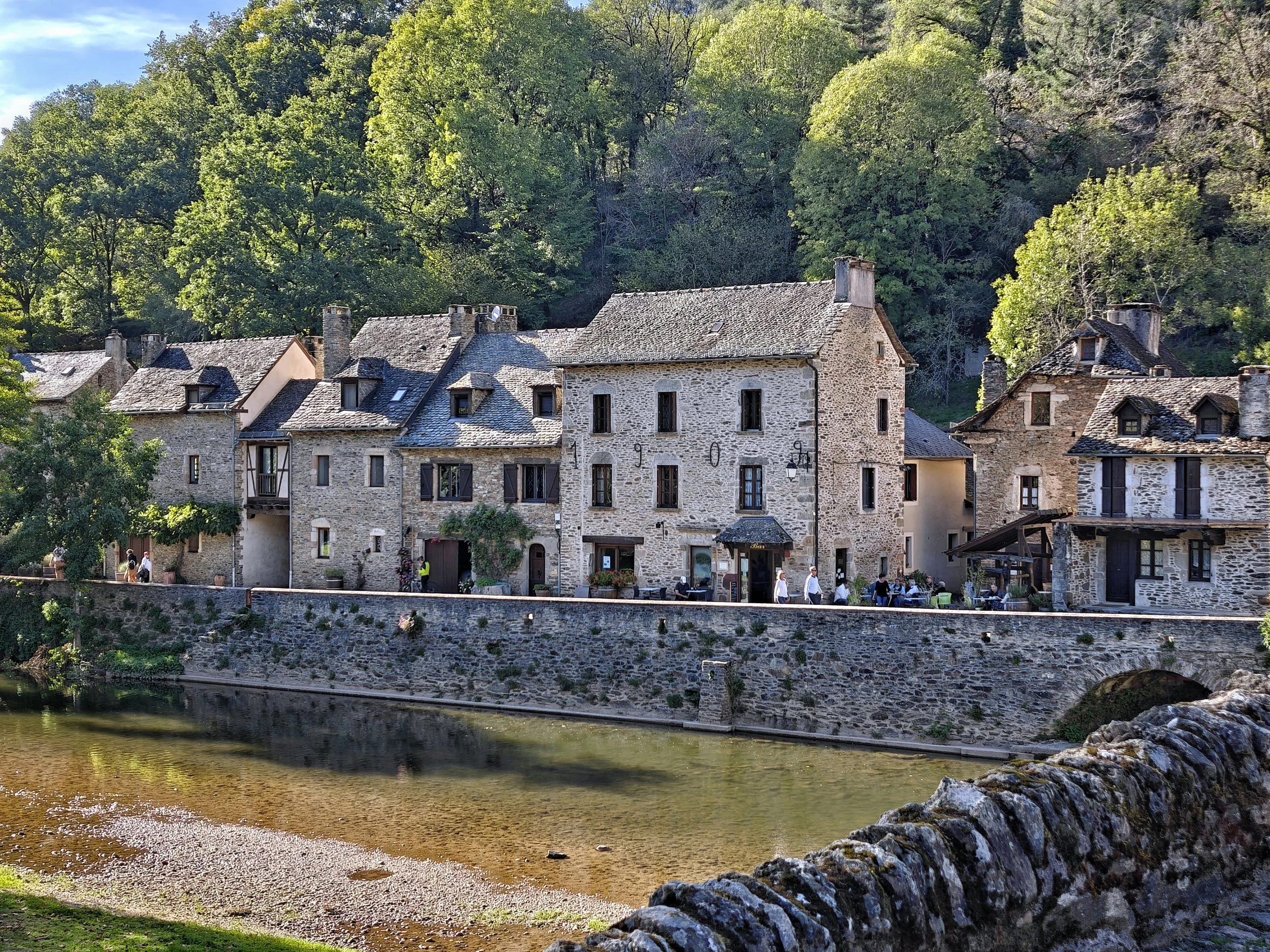
Belcastel village
The village of Belcastel
After restoring the Château to its former glory, Fernand Pouillon decided to help the villagers renovate Belcastel itself, so that the village would reflect the newly regained elegance of the castle. Several of the village houses were in ruins, with collapsed roofs and crumbling walls.
The acclaimed architect worked with the mayor of Belcastel to carry out this ambitious project, focusing on six particularly neglected houses, which still stand today in the very heart of Belcastel. As most of these houses were in an even worse state of ruin than the castle itself, Pouillon’s experience in rebuilding villages – gained while working as a reconstruction architect for the French government after the Second World War – was essential.
Pouillon worked in collaboration with the villagers to bring Belcastel back to life, just as he had previously brought the castle back to life, and he was warmly welcomed. He designed architectural plans to communicate his vision of a “new Belcastel”, while remaining faithful to the original style and form of the village. The renovation carried out by Fernand Pouillon gave the inhabitants of Belcastel renewed pride in their village and created a sensitive architectural harmony between the village and the castle overlooking it.
Sadly, Pouillon died before the village restoration was completed, but the architects and builders who continued his legacy in Belcastel relied on the ideas and plans developed by Pouillon himself. The renovation programme went on with the Roc d’Anglars, an ancient 5th-century fort located on the outskirts of the village, which was restored in 1988, two years after the architect’s death.
Today, Belcastel is a village as vibrant as it is charming, renowned for its authenticity and for its summer night markets and annual festival with fireworks launched above the castle. The village has around 30 permanent residents and about 250 more in the surrounding area. Thanks to the extensive restoration carried out by Fernand Pouillon, Belcastel is now known as a historic village and a much-loved tourist destination for visitors to the Aveyron region. Its classification as one of the “Plus Beaux Villages de France” stands as a tribute to this exceptional architect and to the enormous work that made this distinguished recognition possible.