
History
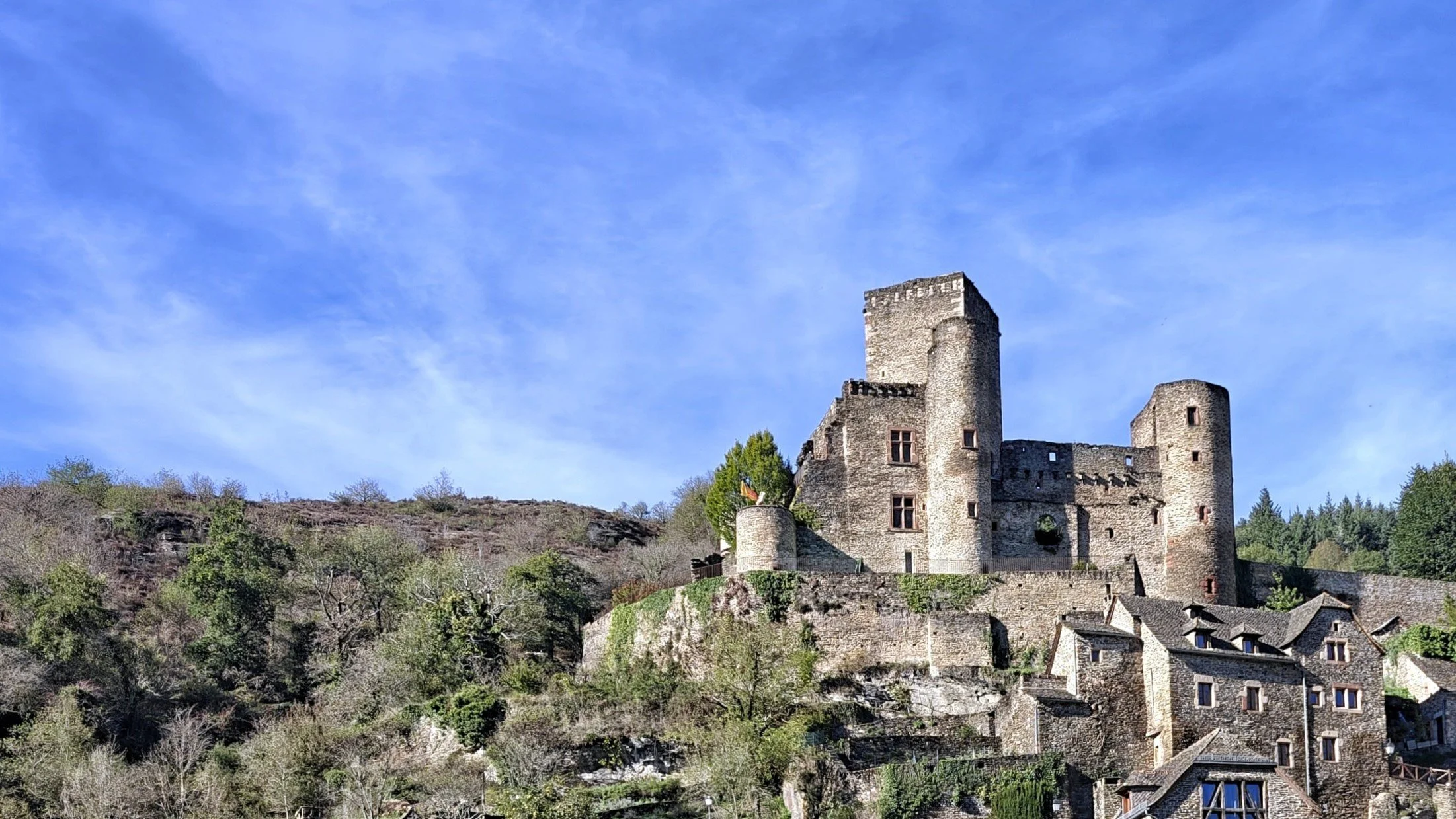
Bellum Castellum,
an impregnable fortress
The History of Château de Belcastel
The story of this medieval fortress begins in the 8th century, when the villagers of Belcastel—though the name did not yet exist—built a pre-Romanesque chapel to practice their faith.
By the 10th century, Oldoric I of Panat constructed a defensive wall around the chapel and its people. Over the following centuries, the fortified core expanded. Thus was born the Aveyron stronghold: Bellum Castellum, the "war castle", and not a “beautiful” castle, as its modern name might suggest.
From Feudal Power to Warring Realms
From the 10th to the 14th century, the lords of Belcastel flourished, extending their influence across the Quercy region. The fortress took on its full military significance, weathering the turbulent conflicts of the era, especially the Hundred Years’ War, during which it changed hands several times. From the Belcastel family to Jean II of Armagnac, then Edward III, King of England, and Charles V, King of France, until finally, in 1393, the castle was granted to Guillaume de Saunhac, loyal squire and knight of the Counts of Armagnac.
A Fortress Never Taken
A remarkable fact: the castle was never taken by force. Its strategic location and formidable defenses resisted even the king’s troops, who were unable to dislodge the routiers (mercenaries) that had occupied it for nearly twenty years during the Hundred Years’ War.
Golden Age and Gradual Abandonment
After the turmoil of war, the Saunhac family asserted their power and wealth by reinforcing and modernizing the fortress, and by building the village bridge and church. But in 1615, Marie de Saunhac, baroness and last lord of Belcastel, passed away at the castle at the age of 85. Her daughter Florette, married to the Marquis of Bournazel, chose instead to live in her husband’s Renaissance castle. Belcastel fell into decline, gradually abandoned.
From Pillage to Obscurity
Spared by the French Revolution, the castle remained deserted until the 19th century, when Rose Acquier, a local villager, purchased it to turn into a stone quarry. Entire sections were stripped for their beautiful stones, leaving gaping wounds. In the early 20th century, the western façade collapsed in a deafening crash, marking the beginning of the end. The dismantling continued until 1928, when the French Ministry of Culture finally listed the fortress as a Historic Monument. Still, for the next 46 years, the castle lay in ruins, overrun by vegetation, and became a playground for the village children.
Fernand Pouillon’s Renaissance
In 1973, renowned French architect Fernand Pouillon discovered the castle’s remains. Captivated by the site, he poured his inspiration and talent into a spectacular restoration, using only medieval techniques, over the course of 8 years. The castle became his private residence. He passed away there in 1986.
A Living and Cultural Heritage
In 2005, Catherine Sayens, Pouillon’s partner, sold the castle to Heidi Leigh and Nick Leone, who opened it to the public and hosted exhibitions and cultural events.
Then, in 2025, Éric and Valérie Girard acquired the castle, committed to preserving its artistic and historical legacy while keeping it open to visitors.
| Date | Event |
|---|---|
| c. 750 | Construction of the pre-Romanesque chapel |
| 940 | Oldoric I of Panat founds the first castle of Belcastel |
| 1031 | First mention of the castle in a notarized document involving Umbert de Belcastel, its lord |
| 1208 | Albigensian Crusade: the Belcastel family, loyal Catholics, participate in the conflict for nearly a century |
| 1247 | Guillaume de Saunhac, ancestor of the Saunhac family, becomes Grand Master of the Templars (dies in 1250) |
| 1286 | King Philip the Fair records that Flotard de Belcastel shares ownership of the castle with at least 9 others |
| 1349 | Umbert de Belcastel, canon of Albi, asks to be buried in the lower pre-Romanesque chapel |
| 1386 | The castle becomes property of the King of France |
| 1391 | Jean III of Armagnac grants the castle to Guillaume de Saunhac for his loyal service to the crown and for expelling mercenaries who had occupied it for over 20 years |
| 1398 | Bernard VII of Armagnac confirms the grant to Alzias I de Saunhac |
| 1420 | Alzias builds the Belcastel bridge and church |
| 1420–1615 | The Saunhac family prospers and becomes one of the most powerful in Rouergue |
| 1600 | Marie de Saunhac gives the castle as dowry to her daughter Florette, who marries the Marquis Buisson de Bournazel |
| 1615 | Marie de Saunhac dies at age 85. Gradual abandonment of the castle begins |
| 1810 | Rose Acquier purchases the castle to use it as a stone quarry |
| 1926 | The Lapeyre family acquires the castle and six houses in Belcastel |
| 1928 | The castle is listed as a historical monument |
| 1973–1986 | Architect Fernand Pouillon purchases and restores the castle over eight years. He dies there in 1986 |
| 1986–2005 | His last companion, Catherine Sayens, inherits the castle and sells it in 2005 |
| 2005–2025 | Heidi Leigh and Nick Leone purchase and open the castle to the public, hosting many cultural events |
| 2025 | Valérie and Éric Girard acquire the castle and choose to keep it open to the public, continuing its cultural vocation |